
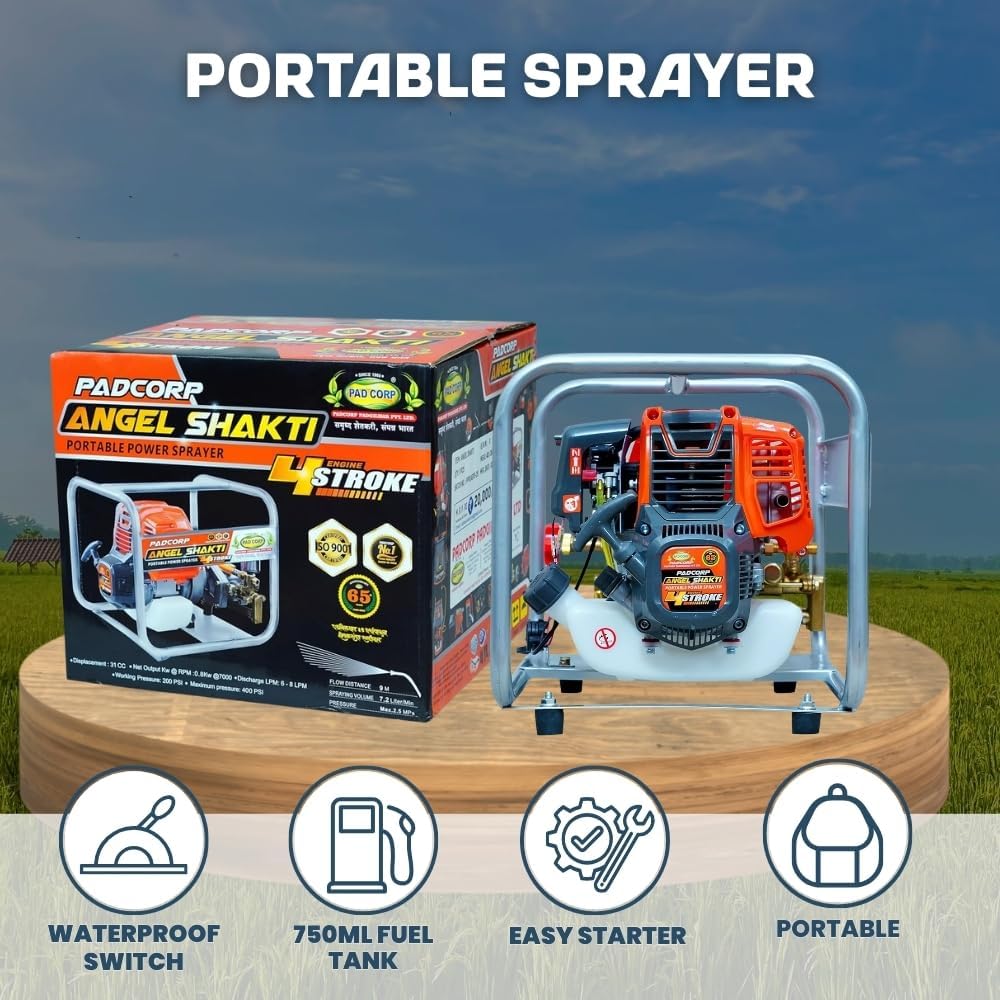
Battery Sprayer for Long Distance Spraying: Complete Buying Guide for Farmers
Spraying pesticides, herbicides, and fertilizers is one of the most essential yet physically demanding tasks in farming. Traditional hand-pump sprayers require constant manual pumping, which slows down work and tires the farmer quickly — especially on large fields or tall crops. This is where battery sprayers have become a game-changer, particularly for long distance spraying. In this guide, we cover what a battery sprayer is, its benefits, key specifications to check, and how to pick the right one for your farm.
What Is a Battery Sprayer?
A battery sprayer is a rechargeable, battery-powered spray pump that eliminates the need for manual pumping. It uses an electric motor connected to a diaphragm pump to deliver continuous, uniform pressure, allowing farmers to spray large areas quickly and with far less physical effort compared to manual sprayers.
Why Choose a Battery Sprayer for Long Distance Spraying?
- Less effort, more coverage: No manual pumping means significantly reduced fatigue over long spraying sessions.
- Greater spray reach: A strong pump pressure lets you reach tall crops, dense canopies, and distant rows with ease.
- Time savings: Continuous, consistent output covers large fields faster than manual alternatives.
- Fuel savings: Unlike petrol/diesel sprayers, battery sprayers run purely on electricity, cutting fuel costs entirely.
- Easy for everyone to use: Lightweight design and simple operation.
Key Specifications to Check for Long Distance Spraying
Before buying a battery sprayer, pay close attention to these technical details:
1. Tank capacity
Most agricultural battery sprayers come in 16L to 25L capacities. An 18-20L tank is a good balance between coverage and refill frequency for medium to large farms.
2. Battery capacity
Typical models use a 12V, 8Ah to 12Ah sealed lead-acid or lithium-ion battery. Lithium-ion batteries are lighter, charge faster, and can support 4-6 hours of continuous spraying on a single charge, while lead-acid batteries are more budget-friendly.
3. Pump pressure
Spray distance largely depends on pump pressure. A 2-4 bar diaphragm pump is sufficient for most field crops, while higher-pressure pumps are better suited for tall trees, orchards, or situations requiring extended reach.
4. Spray distance/range
Standard battery sprayers typically reach 15-25 feet (about 5-8 meters), while high-pressure models can spray 10 meters or more. For orchards and tall standing crops, opt for a sprayer with a longer rated range.
5. Nozzle types
Cone nozzles, jet nozzles, and fan nozzles each serve different purposes — from wide-coverage spraying to focused, long-distance jet spraying. A sprayer that comes with a multi-nozzle kit offers more flexibility across crop types.
6. Motor flow rate (LPM)
A flow rate of around 3-5 liters per minute (LPM) ensures smooth, fast, and even spraying without pressure drops.
Benefits of Using a Battery Sprayer
- Covers 8-12 acres on a single full charge, depending on tank and battery size
- Uniform, consistent spraying reduces chemical wastage
- Adjustable pressure settings suit different crops and spray requirements
- Lightweight build makes it comfortable to carry on the back for extended periods
- Built-in safety features like overcharge protection extend battery life
Precautions While Using a Battery Sprayer
- Always wear gloves, goggles, and a mask while spraying chemicals.
- Follow the label instructions carefully when mixing pesticides or fertilizers.
- Rinse the tank, hose, and nozzles thoroughly with clean water after every use.
- Recharge the battery before it fully discharges to preserve its long-term life.
- If pressure drops or spray becomes uneven, check for a clogged nozzle, low battery charge, or a loose hose connection first.
Typical Price Range in India
Battery sprayers in the Indian market generally range from ₹1,500 to ₹5,000, depending on tank capacity, battery type, and brand. Premium models with lithium-ion batteries and higher pump pressure can cost more but often deliver better long-term value through durability and performance.
Tip: Before buying, compare specifications, warranty terms, and spare parts availability across brands to ensure hassle-free use for years to come.
Crops Suited for Battery Sprayer Use
Battery sprayers work well across a wide range of crops including soybean, cotton, turmeric, ginger, okra, cabbage, cauliflower, onion, tomato, other vegetable crops, and orchard/fruit crops.
Frequently Asked Questions (FAQ)
Q1: How far can a battery sprayer spray? A: Standard models reach 15-25 feet, while high-pressure models can spray 10 meters or more depending on pump pressure and nozzle type.
Q2: How many acres can one battery charge cover? A: Depending on tank size and battery capacity, one full charge typically covers 8-12 acres.
Q3: Should I choose a lithium-ion or lead-acid battery sprayer? A: Lithium-ion batteries are lighter, charge faster, and last longer, while lead-acid batteries are more affordable upfront.
Q4: What is the average price of a battery sprayer? A: Prices generally range from ₹1,500 to ₹5,000 depending on capacity and features.
Disclaimer: Specifications and prices mentioned in this article are general market estimates. Please verify exact specifications, pricing, and warranty details with the manufacturer or dealer before purchasing.