
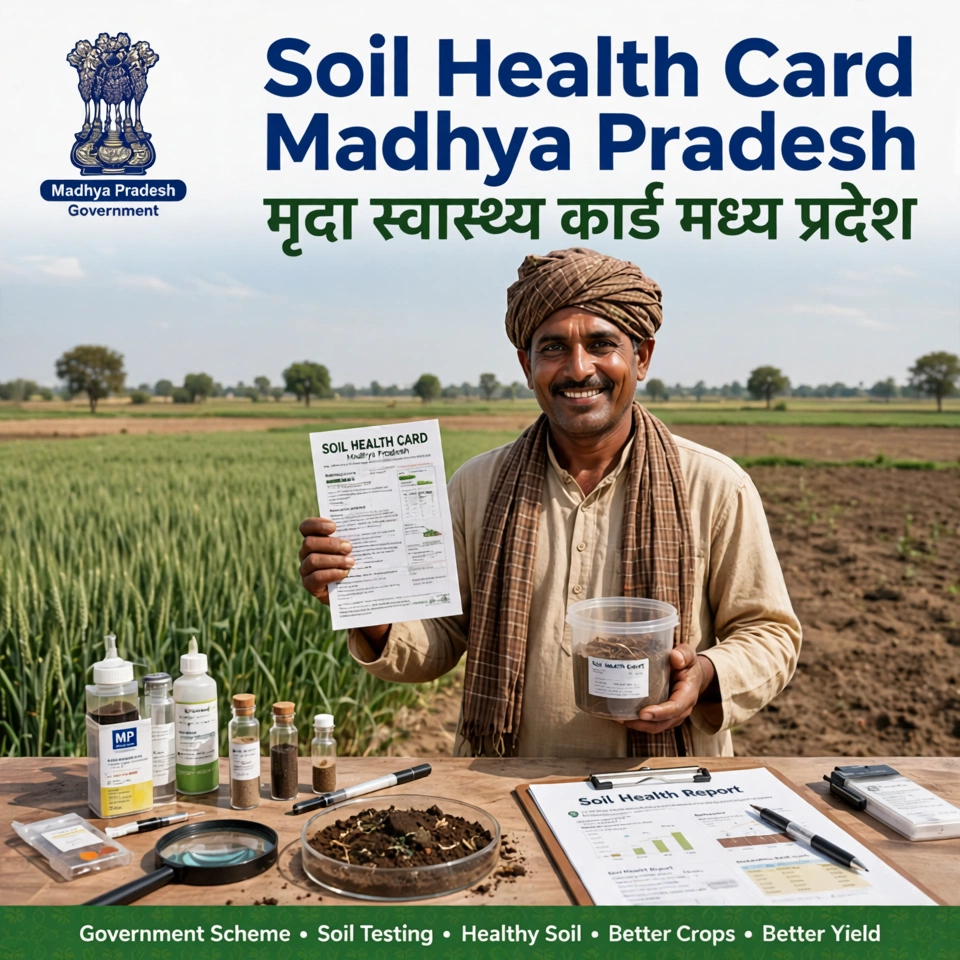
Soil Health Card Madhya Pradesh: Online Registration, Benefits, Soil Testing and How to Download Your Card
Soil Health Card Madhya Pradesh is an important government initiative that helps farmers understand the nutrient condition of their agricultural land. Through scientific soil testing, farmers can identify nutrient deficiencies, understand soil fertility and receive recommendations about fertilizers and soil improvement.
For farmers in Madhya Pradesh, soil health testing can help improve farming decisions, reduce unnecessary fertilizer expenses and support better crop management. Whether you grow wheat, soybean, gram, maize, pulses or other crops, understanding your soil is an important step towards sustainable agriculture.
In this complete guide, we explain the Soil Health Card Scheme in Madhya Pradesh, its benefits, eligibility, registration process, soil testing procedure, important parameters and how farmers can check their soil health reports online.
What Is the Soil Health Card Scheme?
The Soil Health Card (SHC) Scheme is a Government of India initiative launched on 19 February 2015. It aims to provide farmers with scientific information about the nutrient status of their agricultural land.
Under this scheme, soil samples are collected from agricultural fields and tested in authorised soil testing laboratories. After testing, farmers receive a Soil Health Card containing information about soil nutrients and recommendations for fertilizer application and soil improvement.
The card helps farmers understand:
- Which nutrients are available in their soil.
- Whether their soil has nitrogen, phosphorus or potassium deficiencies.
- Whether the soil is acidic, alkaline or neutral.
- How much fertilizer may be required for particular crops.
- Which organic inputs and soil amendments may improve soil fertility.
The scheme operates across India, including Madhya Pradesh, through the agriculture department and designated soil testing laboratories.
Soil Health Card Madhya Pradesh: Key Information
| Particular | Details |
|---|---|
| Scheme Name | Soil Health Card Scheme |
| State | Madhya Pradesh |
| Launched | 19 February 2015 |
| Implementing Ministry | Ministry of Agriculture and Farmers Welfare |
| Beneficiaries | Farmers |
| Main Purpose | Soil testing and nutrient management |
| Testing Facility | Authorised Soil Testing Laboratories |
| Official Portal | soilhealth.dac.gov.in |
| Report | Soil Health Card |
Benefits of Soil Health Card for Madhya Pradesh Farmers
Soil testing is important because different agricultural fields have different nutrient requirements. Applying the same fertilizer quantity to every field may not be suitable.
Here are some major benefits of the Soil Health Card Scheme.
1. Understand Your Soil Fertility
The Soil Health Card provides scientific information about your agricultural soil. Farmers can identify nutrient deficiencies and understand which nutrients are already available.
2. Reduce Unnecessary Fertilizer Expenses
Using fertilizers without knowing the soil condition can increase cultivation costs. Soil testing helps farmers make fertilizer decisions based on actual soil requirements.
3. Improve Crop Productivity
Balanced nutrient management supports healthy plant growth. Following suitable recommendations can help farmers improve crop management and maintain productivity.
4. Identify Nutrient Deficiencies
The report identifies important soil nutrients such as nitrogen, phosphorus, potassium, sulphur, zinc, iron and other micronutrients.
5. Improve Long-Term Soil Health
Regular soil testing and suitable soil management practices help maintain soil fertility and support sustainable agriculture.
6. Get Crop-Based Fertilizer Recommendations
The card provides fertilizer and soil amendment recommendations according to soil test results and crop requirements.
Which 12 Parameters Are Tested in a Soil Health Card?
The Soil Health Card evaluates 12 important soil parameters. These parameters help determine the nutrient status and chemical properties of agricultural soil.
| No. | Soil Parameter | Purpose |
|---|---|---|
| 1 | Nitrogen (N) | Supports plant growth and leaf development |
| 2 | Phosphorus (P) | Supports root development and flowering |
| 3 | Potassium (K) | Supports plant strength and crop quality |
| 4 | Sulphur (S) | Helps protein formation and plant development |
| 5 | Zinc (Zn) | Supports enzyme activity and plant growth |
| 6 | Iron (Fe) | Helps chlorophyll formation |
| 7 | Copper (Cu) | Supports plant metabolism |
| 8 | Manganese (Mn) | Supports photosynthesis |
| 9 | Boron (B) | Supports flowering and reproductive growth |
| 10 | pH | Measures soil acidity or alkalinity |
| 11 | Electrical Conductivity (EC) | Indicates soluble salt concentration |
| 12 | Organic Carbon (OC) | Indicates the organic matter status of soil |
Farmers should understand that fertilizer recommendations must be based on the actual laboratory report, crop requirements and local agricultural guidance.
How to Apply for Soil Health Card in Madhya Pradesh?
Farmers in Madhya Pradesh can contact their nearest agriculture department office or authorised soil testing laboratory to understand the available soil sampling and testing facilities.
Follow these steps:
Step 1: Visit Your Nearest Agriculture Office
Contact your local Krishi Vibhag office, Rural Agriculture Extension Officer or designated soil testing laboratory.
You can ask about Soil Health Card registration and sample collection facilities in your village.
Step 2: Provide Your Agricultural Land Details
Keep the following information ready:
- Farmer’s name
- Village and district
- Mobile number
- Agricultural land details
- Survey number or Khasra details, where required
- Crop information
The exact documents and details required may vary according to the local registration process.
Step 3: Collect a Soil Sample
Soil samples should be collected using the recommended scientific sampling procedure.
A representative sample should be collected from the agricultural plot rather than taking soil from just one random location.
Avoid collecting soil from field boundaries, manure heaps, waterlogged patches or recently fertilised spots.
Step 4: Submit the Soil Sample
Submit the properly collected sample to the designated soil testing laboratory or follow the sample collection process arranged by the agriculture department.
Step 5: Laboratory Testing
The laboratory analyses the soil sample for the required parameters and records the test results.
Step 6: Receive Your Soil Health Card
After the test results are processed, the Soil Health Card is generated with nutrient information and fertilizer recommendations.
Farmers can obtain the report through the applicable distribution facility or official online portal.
How to Check Soil Health Card Online in Madhya Pradesh?
Farmers can use the official national Soil Health Card portal to access information and available online services.
Follow these steps:
- Open the official Soil Health Card website: https://soilhealth.dac.gov.in/
- Look for the available farmer or citizen services.
- Select the relevant state and district options, if requested.
- Enter the required details, such as farmer, sample or registration information.
- Follow the portal instructions to locate your soil health report.
- If the report is available for download, save the card as a PDF.
Important: Online availability depends on the registration and testing records uploaded to the portal. If you cannot find your report, contact your local agriculture office or soil testing laboratory for assistance.
Soil Health Card for Major Crops in Madhya Pradesh
Madhya Pradesh is an important agricultural state with different soil types, climatic conditions and cropping patterns.
Soil testing is useful for farmers cultivating the following crops.
Wheat Farming
Wheat farmers should understand nitrogen, phosphorus, potassium and sulphur levels before planning fertilizer applications. Soil test recommendations can help determine suitable nutrient management.
Soybean Farming
Soybean is an important crop in Madhya Pradesh. Balanced nutrient management, appropriate soil pH and organic carbon management are important considerations for soybean cultivation.
Gram Farming
Gram farmers should consider soil fertility, phosphorus availability and other nutrient requirements when planning cultivation.
Maize Farming
Maize requires balanced nutrient management for healthy growth and crop development. Soil testing helps identify nutrient deficiencies before fertilizer application.
Mustard Farming
Mustard farmers can use soil testing reports to understand sulphur and other nutrient requirements.
Remember: Crop-specific fertilizer doses should be determined from the actual soil test report and recommendations from agricultural experts. Do not apply the same fertilizer dose to every field.
Important Soil Testing Practices for Farmers
Getting a Soil Health Card is only the first step. Farmers should also follow proper soil management practices.
- Collect soil samples at recommended intervals.
- Test different soil types and separately managed plots where necessary.
- Use organic manure and compost according to soil requirements.
- Avoid excessive fertilizer application.
- Follow crop rotation wherever suitable.
- Maintain proper irrigation and drainage.
- Consult agriculture experts before applying soil amendments.
These practices can support long-term soil fertility and more efficient nutrient management.
Where Can Madhya Pradesh Farmers Get Soil Testing Information?
Farmers can contact the following government resources:
1. Madhya Pradesh Agriculture Department
Visit the official Madhya Pradesh agriculture website for agriculture-related services and updates.
Website: https://mpkrishi.mp.gov.in/
2. Soil Health Card Portal
Use the national portal for soil health card services and information.
Website: https://soilhealth.dac.gov.in/
3. District Agriculture Office
Farmers can visit their district agriculture office for information about soil sample collection, testing facilities and report availability.
4. Krishi Vigyan Kendra (KVK)
Farmers can also approach their nearest Krishi Vigyan Kendra for agricultural guidance and information about available soil testing facilities.
Frequently Asked Questions (FAQs)
1. What is the Soil Health Card Scheme in Madhya Pradesh?
The Soil Health Card Scheme provides farmers with scientific information about their agricultural soil. It includes nutrient test results and recommendations for fertilizer application and soil improvement.
2. How can I apply for a Soil Health Card in Madhya Pradesh?
Visit your nearest agriculture department office, Rural Agriculture Extension Officer or authorised soil testing laboratory. Ask about registration and soil sample collection procedures.
3. Is Soil Health Card testing free in Madhya Pradesh?
Government scheme guidelines and district-level facilities may provide soil testing services without charge to eligible farmers. Confirm the current availability and applicable conditions with your local agriculture department before submitting a sample.
4. Which documents are required for a Soil Health Card?
Farmers may be asked to provide their name, mobile number, village, agricultural land details and other registration information. Requirements can differ by location and service facility.
5. How many nutrients are tested in a Soil Health Card?
The Soil Health Card evaluates 12 parameters, including nitrogen, phosphorus, potassium, sulphur, zinc, iron, copper, manganese, boron, pH, electrical conductivity and organic carbon.
6. Can I download my Soil Health Card online?
Farmers can visit the official portal at https://soilhealth.dac.gov.in/ and follow the available report access instructions. Online reports depend on the availability of uploaded records.
7. How often should soil be tested?
Regular soil testing is recommended. Follow the testing cycle advised by the agriculture department and consider testing when soil conditions, cropping patterns or nutrient management requirements change.
8. Why is soil testing important for soybean and wheat farmers?
Soil testing helps identify nutrient deficiencies and supports better fertilizer planning. It can help soybean and wheat farmers make more informed decisions about soil fertility management.
9. Does the Soil Health Card recommend fertilizers?
Yes. The card provides fertilizer and soil amendment recommendations based on soil test results and crop requirements.
10. Where can I get help regarding Soil Health Card registration?
Contact your local Agriculture Extension Officer, District Agriculture Office, authorised soil testing laboratory or nearest Krishi Vigyan Kendra.
Conclusion: Get Your Soil Tested for Better Farming in Madhya Pradesh
Healthy soil is the foundation of successful agriculture. The Soil Health Card Scheme helps Madhya Pradesh farmers understand their soil conditions, identify nutrient deficiencies and make informed fertilizer decisions.
Whether you cultivate soybean, wheat, gram, maize or mustard, regular soil testing can help improve nutrient management, reduce unnecessary input expenses and support sustainable farming.
Farmers should use their soil health reports regularly and follow recommendations from authorised agriculture experts.
For more information about agricultural schemes, farming techniques, modern agricultural equipment, machinery and farming solutions, visit KrushiTools.com.
KrushiTools – Your Agriculture Information and Farming Resource.