
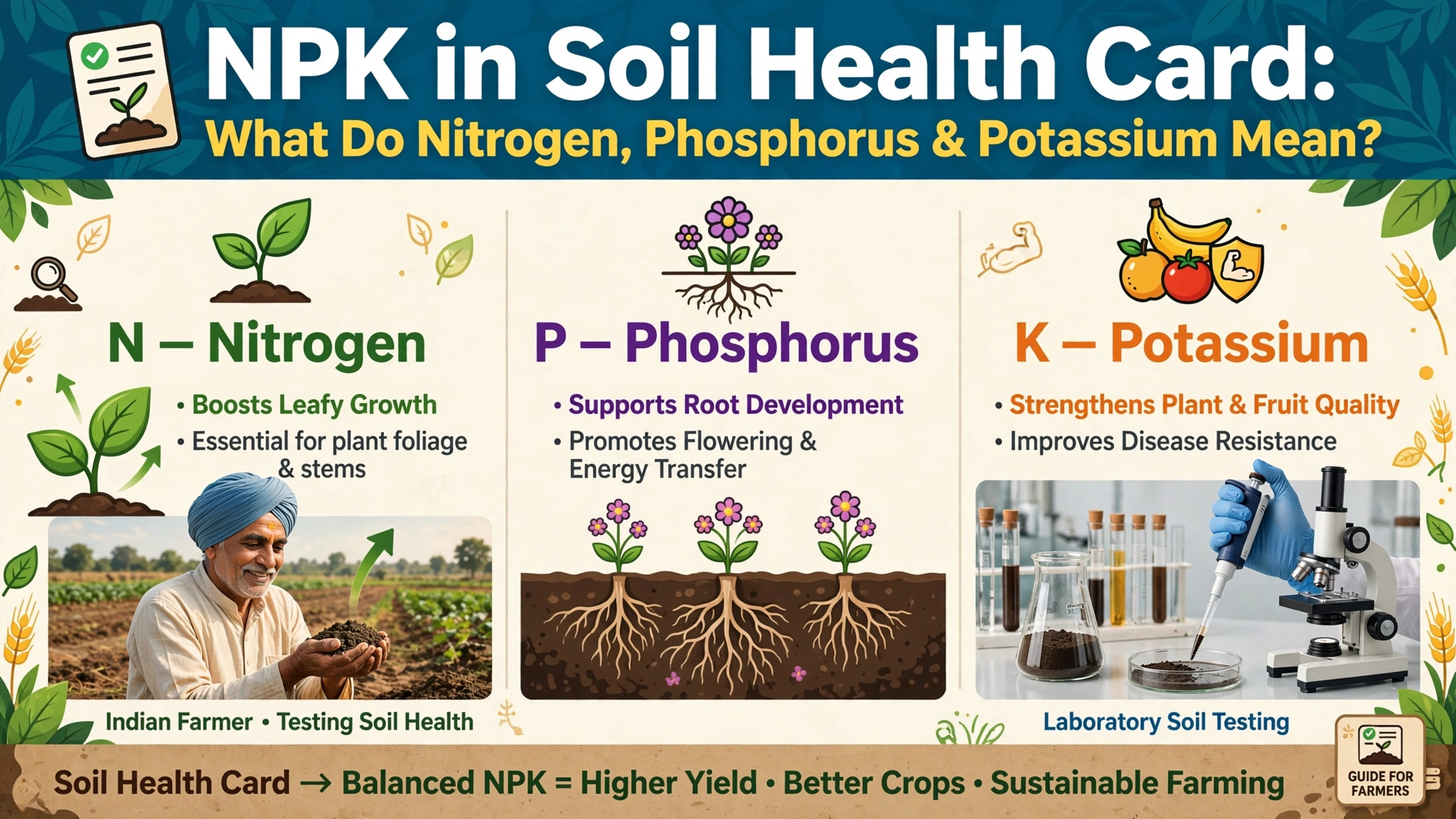
NPK in Soil Health Card: What Do Nitrogen, Phosphorus & Potassium Mean?
Introduction
Soil is the foundation of every successful harvest. However, continuous cropping and heavy chemical usage can strip agricultural soil of its essential nutrients over time. To combat this, governments and agricultural scientists introduced the Soil Health Card (SHC) scheme, a revolutionary initiative designed to help farmers understand their soil’s precise nutrient status.
If you have ever received a Soil Health Card, you likely noticed three prominent letters: N, P, and K. But what do these symbols actually stand for, and why are they critical for your crops?
In this comprehensive guide, we will break down the science of NPK in Soil Health Cards, explain their roles in plant growth, and show you how to optimize your farm output with the right equipment from Krushi Tools.
What is a Soil Health Card?
A Soil Health Card is a printed report card provided to farmers that tests soil samples for 12 key parameters, including pH, electrical conductivity (EC), organic carbon, and primary/secondary nutrients. Most importantly, it gives customized fertilizer recommendations based on the specific crop a farmer intends to grow.
By following the recommendations on an SHC, farmers can avoid over-application of costly fertilizers, lower input costs, and protect long-term soil fertility.
The Core Triad: What Do Nitrogen, Phosphorus, and Potassium Mean?
At the heart of soil fertility and fertilizer management are the three primary macronutrients: Nitrogen (N), Phosphorus (P), and Potassium (K). Plants require these elements in large quantities to complete their life cycles.
1. Nitrogen (N) – The Growth Driver
- What it does: Nitrogen is primarily responsible for the lush, green vegetative growth of plants. It is a core component of chlorophyll, the compound by which plants use sunlight energy to produce sugars (photosynthesis).
- Signs of Deficiency: Stunted growth, yellowing of older leaves (chlorosis), and thin stems.
- Why it matters: Adequate nitrogen ensures high leaf production, making it vital for leafy vegetables, cereals, and the early vegetative stages of most crops.
2. Phosphorus (P) – The Root & Energy Builder
- What it does: Phosphorus plays a crucial role in root development, flower formation, seed production, and energy transfer within the plant. It helps convert solar energy into chemical food energy.
- Signs of Deficiency: Dark green or purplish discoloration on leaves, weak root systems, and delayed flowering or maturity.
- Why it matters: Without sufficient phosphorus, root establishment fails, severely limiting the plant’s ability to absorb water and other nutrients later in its lifecycle.
3. Potassium (K) – The Health & Immunity Booster
- What it does: Potassium regulates internal cellular pressure, helps control water intake, activates essential enzymes, and strengthens the plant’s natural resistance to diseases, droughts, and frost.
- Signs of Deficiency: Scorched or burned leaf edges, weak stalks prone to lodging (falling over), and poor fruit quality.
- Why it matters: Potassium ensures high crop quality, disease resistance, and better grain filling or fruit sizing.
How to Read NPK Values on Your Soil Health Card
When your soil test results arrive, the NPK levels are typically categorized as Low (L), Medium (M), or High (H):
- If N is Low: The card will recommend supplementing your soil with nitrogen-rich fertilizers like Urea or organic manure.
- If P is Low: The report will suggest applying single superphosphate (SSP) or diammonium phosphate (DAP).
- If K is Low: Application of Muriate of Potash (MOP) will be recommended.
Reading these values correctly prevents the dangerous practice of “blind fertilization,” saving money while maximizing yields.
Maximizing Crop Yields with the Right Tools from Krushi Tools
Balancing NPK levels in your soil is only part of the equation. To truly unlock high yields, you need efficient farm management practices and reliable agricultural tools. Once your soil nutrients are optimized, proper tilling, sowing, weeding, and spraying ensure your crops absorb those nutrients effectively.
At Krushi Tools, we offer heavy-duty equipment designed to support modern farmers at every stage of crop production:
- Power Tillers & Cultivars: Perfect for mixing organic manures and fertilizers evenly into the soil bed.
- Agricultural Pumps & Sprayers: Essential for delivering liquid fertilizers, micro-nutrients, and protective crop sprays uniformly across your fields.
- Harvesting Equipment: Streamlines post-harvest operations so you can quickly prepare your land for the next nutrient cycle.
Conclusion
Understanding NPK in your Soil Health Card is an essential step toward precision agriculture. By knowing exact levels of Nitrogen, Phosphorus, and Potassium, you can tailor your fertilizer inputs precisely, protecting your soil structure while boosting profitability.
Pair your data-driven farming strategy with high-performance machinery and tools. Visit Krushi Tools today to explore rugged agricultural equipment built to elevate your farming success!
Frequently Asked Questions (FAQs)
Q1: What does NPK stand for in agriculture?
A: NPK stands for Nitrogen (N), Phosphorus (P), and Potassium (K)—the three primary macronutrients vital for plant health and development.
Q2: How often should a farmer get a Soil Health Card test?
A: It is generally recommended to test your soil once every 2 to 3 years, or before major seasonal crop rotations, to track nutrient changes accurately.
Q3: Where can I buy reliable farming machinery online?
A: You can explore a wide range of agricultural tools, sprayers, pumps, and farming equipment online at Krushi Tools.