
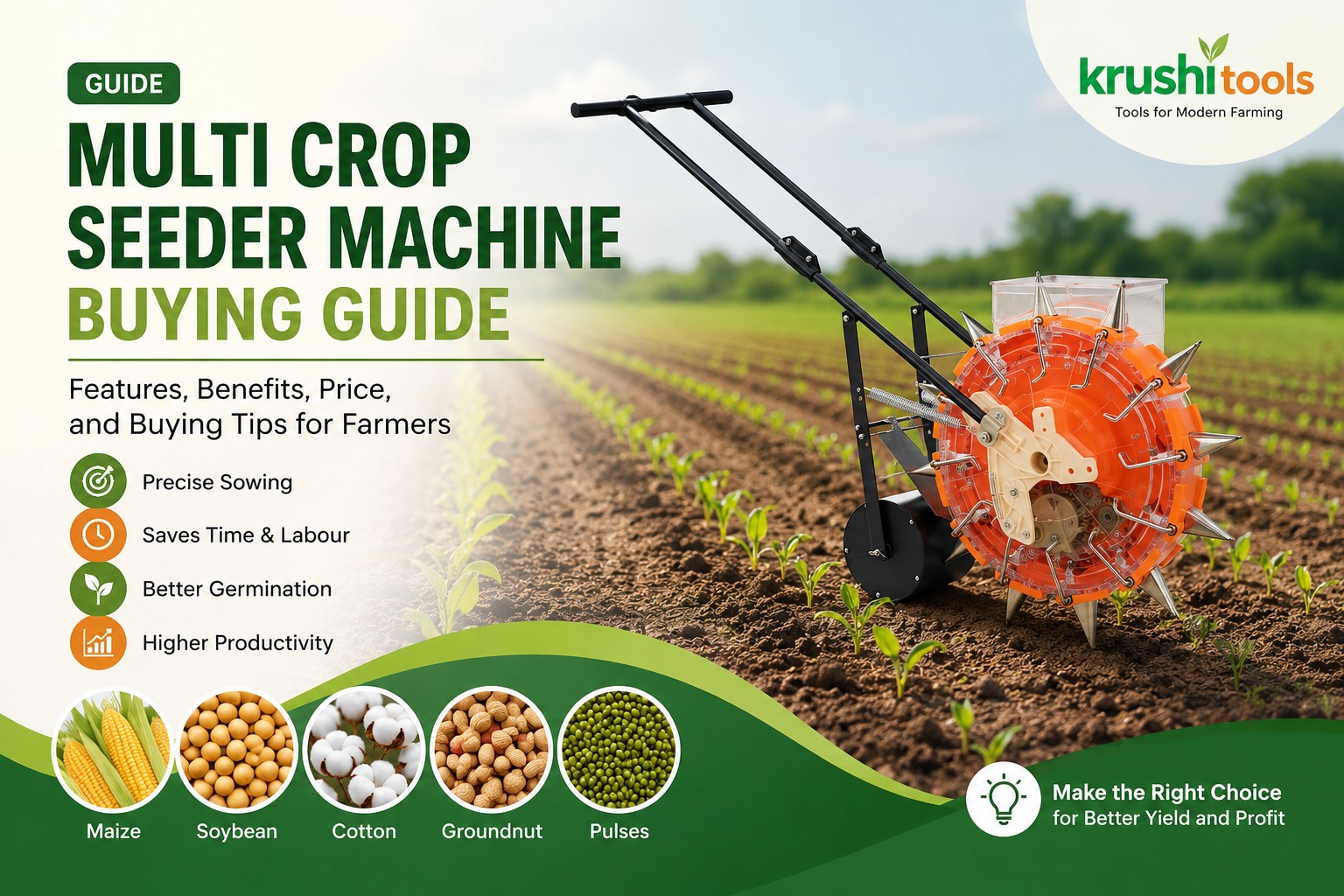
Multi Crop Seeder Machine Buying Guide
What is a Multi Crop Seeder Machine?
A Multi Crop Seeder Machine is one of the most valuable agricultural implements available for today’s farmers. Instead of sowing seeds manually, this machine places seeds at the correct depth, spacing, and row alignment, helping farmers achieve better germination and higher productivity. Modern multi-crop seeders are designed to work with several crops, including maize, soybean, cotton, wheat, groundnut, sunflower, sorghum, pulses, and millets, making them an excellent investment for diversified farming. Precision seed placement has become a major focus in modern agriculture because uniform seed spacing contributes directly to healthier crop growth and improved yields. Manufacturers such as John Deere highlight features like depth control wheels, adjustable seed spacing, and reduced seed wastage to improve planting accuracy.
Unlike traditional sowing methods that demand extensive labour and often lead to uneven seed distribution, a multi crop seeder automates the planting process. The machine ensures that every seed is placed consistently, reducing overcrowding and preventing gaps between plants. This results in stronger root development, better nutrient absorption, and easier crop management throughout the growing season. For Indian farmers facing labour shortages and increasing cultivation costs, investing in a multi crop seeder is no longer considered a luxury—it has become a practical solution that improves operational efficiency while reducing production expenses.
How Does a Multi Crop Seeder Machine Work?
The working principle of a multi crop seeder is simple yet highly effective. As the machine moves across the field, the seed metering mechanism accurately picks individual seeds and releases them into furrows created by the opener. Immediately after placement, the soil covers the seeds at the required depth, ensuring optimum germination conditions. Many advanced models also include a fertilizer attachment, allowing seed and fertilizer application in a single pass.
Modern precision planters incorporate adjustable sprockets, interchangeable seed plates, and depth control systems to accommodate different seed sizes and field conditions. Farmers can easily adjust row spacing and seed population according to crop requirements. This flexibility allows one machine to handle multiple crops throughout the year, reducing equipment costs and increasing return on investment. Precision sowing also reduces seed wastage, ensuring every kilogram of purchased seed contributes effectively to crop production.
Why Every Modern Farmer Should Use a Multi Crop Seeder
Mechanised sowing has transformed farming practices across India. One of the biggest advantages of using a multi crop seeder is the significant reduction in labour dependency. With agricultural labour becoming increasingly expensive and difficult to find during peak sowing seasons, mechanised planting enables farmers to complete sowing operations quickly and efficiently.
Another major advantage is improved crop uniformity. When seeds are placed at equal spacing and depth, crops emerge more evenly, making irrigation, fertiliser application, and weed management much easier. Uniform crop establishment also contributes to higher productivity and better harvesting efficiency. Manufacturers report that precision planting can improve germination rates while reducing seed wastage through accurate placement.
Additional benefits include:
| Benefit | Impact |
|---|---|
| Uniform seed spacing | Better crop growth |
| Reduced labour requirement | Lower cultivation cost |
| Accurate seed placement | Less seed wastage |
| Fertilizer application | Saves time and fuel |
| Faster sowing | Timely crop establishment |
Types of Multi Crop Seeder Machines
Choosing the correct type depends on your farm size, budget, and tractor availability.
Manual Multi Crop Seeders
Manual seeders are ideal for vegetable growers and small farms. They are lightweight, affordable, and easy to operate. Prices generally start from around ₹8,000, while advanced hand-push multi-row models can cost approximately ₹34,500 depending on capacity and configuration.
Tractor Mounted Multi Crop Seeders
These are suitable for medium and large farms. They can cover large areas quickly while maintaining excellent planting precision. Most models are compatible with tractors ranging from 35 HP to 75 HP depending on the implement design.
Seed Cum Fertilizer Drills
These machines perform two operations simultaneously by placing seeds and fertiliser together. This reduces field operations, lowers fuel consumption, and ensures nutrients are positioned close to developing roots.
Key Features to Consider Before Buying
Selecting the right machine requires evaluating several important factors.
Seed Metering System
A quality metering mechanism ensures every seed is released accurately. Precision metering significantly reduces skipped or doubled seeds, improving field uniformity.
Adjustable Row Spacing
Different crops require different spacing. Choose a machine that allows quick adjustment between rows to accommodate maize, cotton, soybean, pulses, wheat, and vegetables.
Fertilizer Box
Machines equipped with fertilizer attachments improve operational efficiency by completing two farming operations in one pass.
Tractor Compatibility
Always verify your tractor’s horsepower before purchasing. Most precision multi crop planters are compatible with tractors in the 35–75 HP range, although specifications vary by manufacturer.
Build Quality
Look for:
- Heavy-duty steel frame
- Rust-resistant coating
- Durable seed tubes
- Reliable bearings
- Easy spare part availability
Multi Crop Seeder Machine Price in India (2026)
Prices vary according to machine type, number of rows, precision features, and brand.
| Machine Type | Approximate Price |
|---|---|
| Manual Seeder | ₹8,000 – ₹35,000 |
| Basic Seed Drill | ₹40,000 – ₹75,000 |
| Seed Cum Fertilizer Drill | ₹75,000 – ₹1,20,000 |
| Precision Multi Crop Planter | ₹1,40,000 – ₹2,00,000 |
| Super Seeder | ₹1,80,000 – ₹2,50,000 |
In several Indian states, eligible farmers may receive subsidies under agricultural mechanisation programmes such as the Sub-Mission on Agricultural Mechanization (SMAM), although availability and subsidy percentages depend on state policies and annual budgets. Farmers should verify eligibility with their local agriculture department before purchasing.
Best Crops Suitable for Multi Crop Seeders
One of the strongest advantages of these machines is versatility. A good multi crop seeder can handle a wide variety of crops using interchangeable seed plates and spacing adjustments.
Common compatible crops include:
- Wheat
- Maize
- Soybean
- Cotton
- Groundnut
- Sunflower
- Sorghum
- Bajra
- Millets
- Green gram
- Black gram
- Chickpea
- Pigeon pea
Always confirm compatibility with the manufacturer’s specifications before purchasing.
Maintenance Tips
Proper maintenance extends the lifespan of your seeder and ensures consistent performance.
After every use, thoroughly clean the seed box and fertilizer chamber to prevent corrosion and clogging. Lubricate moving parts according to the manufacturer’s recommendations and regularly inspect chains, sprockets, bearings, and seed tubes for wear. Replace damaged seed plates promptly to maintain planting accuracy.
Store the machine in a dry, covered location during the off-season. Before each sowing season, calibrate the seed metering system to match the seed size and planting rate required for your crop. Preventive maintenance reduces unexpected breakdowns during critical planting windows and helps maintain precision throughout the machine’s service life. Multi Crop Seeder Machine Buying Guide.
Multi Crop Seeder Buying Checklist
Before finalising your purchase, consider the following checklist:
- ✔ Farm size
- ✔ Crops grown
- ✔ Tractor horsepower
- ✔ Row spacing requirements
- ✔ Fertilizer attachment
- ✔ Spare parts availability
- ✔ Local dealer support
- ✔ Warranty coverage
- ✔ Ease of maintenance
- ✔ Government subsidy eligibility
Choosing a reputable brand with strong after-sales support often provides better long-term value than selecting the lowest-priced option.
Conclusion
A Multi Crop Seeder Machine is a smart investment for farmers seeking higher productivity, reduced labour costs, and precision planting. By ensuring accurate seed placement, consistent spacing, and efficient fertiliser application, these machines contribute to healthier crops and improved yields. Whether you operate a small family farm or manage large-scale agricultural operations, selecting the right model based on farm size, crop requirements, and tractor compatibility can significantly enhance farming efficiency. As precision agriculture continues to gain momentum across India, investing in a quality multi crop seeder positions farmers to achieve better profitability and sustainable crop production for years to come.
Frequently Asked Questions
1. What is a Multi Crop Seeder Machine?
A Multi Crop Seeder Machine is an agricultural implement designed to sow different crop seeds accurately at the required spacing and depth using a single machine.
2. Which crops can be planted using a Multi Crop Seeder?
Most models support wheat, maize, soybean, cotton, pulses, groundnut, sunflower, sorghum, and several other crops, depending on the available seed plates.
3. How much does a Multi Crop Seeder Machine cost in India?
Prices generally range from ₹8,000 for manual models to approximately ₹2.5 lakh for advanced precision seeders, depending on features and capacity.
4. Can one machine sow seeds and fertiliser together?
Yes. Seed cum fertiliser drills are designed to place both seeds and fertiliser simultaneously, saving time and reducing field operations.
5. Is there any government subsidy available?
Many states provide subsidies through agricultural mechanisation schemes, but eligibility, subsidy amounts, and availability vary by state and funding. Farmers should confirm details with their local agriculture office before purchasing. Multi Crop Seeder Machine Buying Guide.