
Battery Brush Cutter for Agriculture: A Complete Guide for Modern Farmers
Battery Brush Cutter for Agriculture: What Is It?
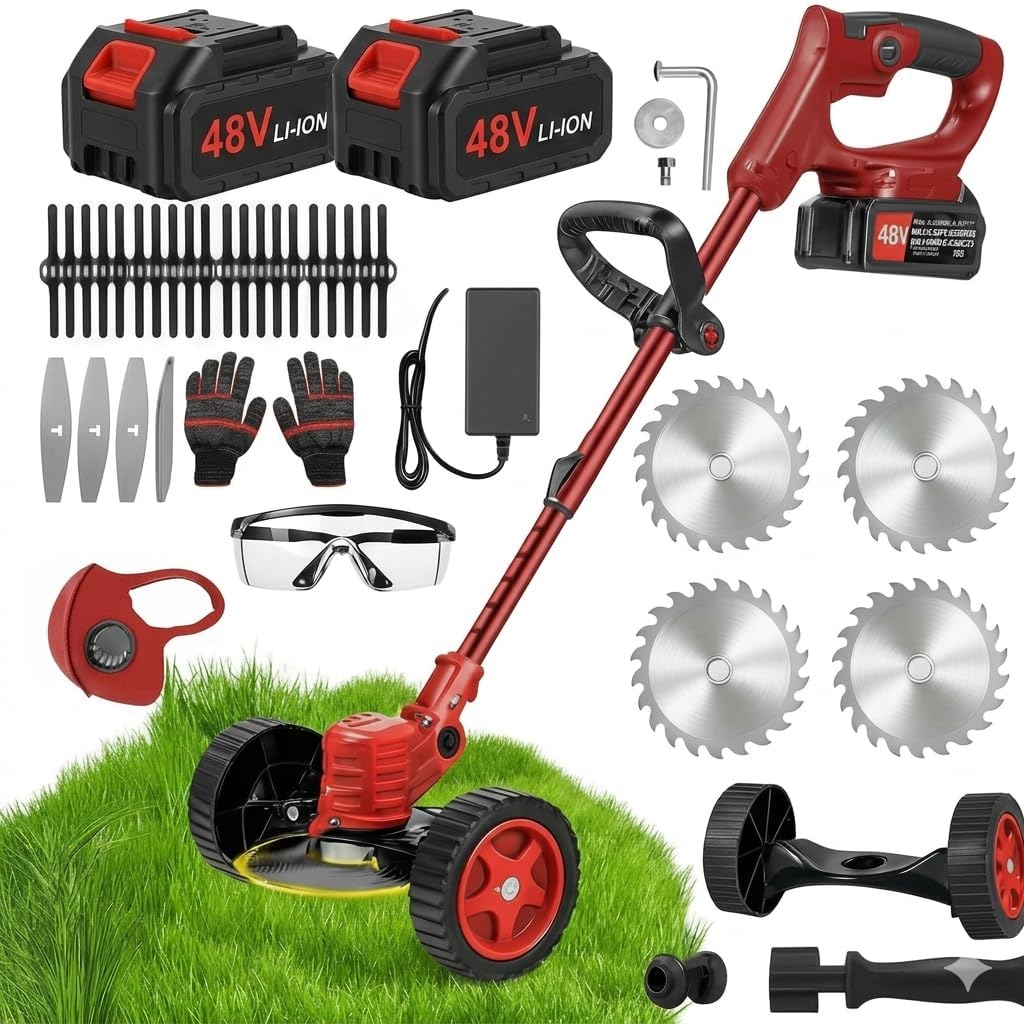
A battery brush cutter for agriculture is a cordless agricultural machine designed to cut grass, weeds. Unwanted vegetation, crop residues, and selected crops without relying on petrol or diesel as its direct power source. Instead of an internal-combustion engine, it generally uses a rechargeable battery connected to an electric motor, with the motor transferring power through a shaft and gear mechanism to a cutting blade or trimming head.
The basic concept is simple: charge the battery, attach the appropriate cutting tool, wear the recommended protective equipment, and operate the machine in the field. Yet this relatively simple change in power source can make a meaningful difference for farmers who regularly deal with grass, weeds, field borders, orchard vegetation, and harvesting or clearing work. Agricultural engineering research in India has already explored battery-operated brush cutters specifically for small farmers, including an ICAR-CRIDA e-brush cutter intended to reduce fuel consumption and cultivation costs.
The research design incorporates a battery unit, DC motor, controller, shaft, gear head, blade, and crop-gathering components, showing that battery power is not merely a gardening concept but can be adapted for agricultural operations. For farmers, the biggest attraction is the combination of portability, reduced dependence on fuel, comparatively quiet operation, and potentially lower routine maintenance. A battery brush cutter is therefore best understood as a farm mechanization tool, not simply an electric grass trimmer. The correct machine, battery capacity, blade, harness, and operating technique can turn it into a useful companion for small and medium agricultural tasks.
Why Battery-Powered Brush Cutters Are Becoming Important in Agriculture
Agriculture constantly balances three things: labour availability, operating cost, and productivity. When manual workers are unavailable or expensive, farmers look toward mechanization; when petrol prices and maintenance become burdensome, electric equipment becomes more attractive; and when work has to be completed quickly during a narrow harvesting or weeding window, portable machinery can provide valuable assistance. Battery-powered brush cutters fit into this changing environment because they can provide mechanical cutting power without requiring petrol to be carried and mixed during everyday operations. Indian agricultural research has specifically examined electric farm machinery as a potential solution for small holdings, with ICAR researchers developing battery-powered equipment for operations including sowing, weeding, and cutting. One ICAR study on a versatile electric prime mover reported that battery-powered machinery could reduce fuel use and offer substantial economic advantages compared with certain conventional tractor and power-tiller operations, although results depend heavily on the machine and application. A battery brush cutter does not replace every agricultural machine, of course, and it should not be marketed as a universal replacement for tractors, harvesters, or high-powered petrol brush cutters. Its value is strongest where portability and frequent short-duration cutting tasks matter. A farmer managing orchard floors, field boundaries, vegetable plots, small holdings, plantation areas, or grass-covered pathways may find that a cordless machine is easier to start and move than a conventional engine machine. The absence of exhaust emissions at the point of operation also makes indoor or enclosed storage-area work less problematic, while reduced noise can make communication easier when several people are working nearby. As agricultural labour becomes more difficult to organize during peak seasons, tools that reduce repetitive manual cutting can become increasingly useful.
Common Agricultural Jobs Performed With a Battery Brush Cutter
The usefulness of a battery brush cutter depends on the cutting attachment, motor capacity, battery, terrain, vegetation density, and manufacturer specifications. A lightweight machine can be appropriate for grass trimming and lighter weeds, while a more robust agricultural model with a suitable blade can handle tougher vegetation. Some battery-powered agricultural brush cutters available in India are specifically promoted for crop harvesting, grass cutting, and bush clearing, while research prototypes have also been evaluated for crop stems under controlled conditions. Farmers may use appropriate machines for grass cutting around farms, weed removal, field-edge maintenance, orchard floor management, clearing pathways, trimming vegetation around irrigation areas, and selected harvesting operations. Crop harvesting requires particular caution because the correct blade and machine configuration are essential, and not every brush cutter is suitable for every crop. The operator must also consider whether the rotating blade could damage valuable plants, irrigation pipes, fencing, or other infrastructure. Battery equipment can be particularly convenient for jobs where the worker moves frequently because there is no electrical power cable trailing behind the machine. This cordless mobility is one reason portable battery cutters can be attractive in orchards, uneven plots, and areas far from electrical outlets. However, farmers should distinguish between a grass trimmer, a brush cutter, and a specialized crop harvesting machine. Their power levels and cutting systems can differ considerably. A compact household trimmer should not automatically be assumed to be capable of cutting thick agricultural vegetation. Before purchase, the intended crop, stem diameter, grass density, working hours, field size, and cutting attachment should all be considered together.
Battery Brush Cutter for Grass, Weeds, and Crop Residues
Grass and weed management is one of the most obvious applications for a battery brush cutter because these jobs are often repetitive and spread across many parts of a farm. Instead of using a sickle manually for extended periods, the operator can use a suitable powered cutter while walking through the field or around its boundaries. This can reduce repetitive physical effort and potentially increase the amount of area covered per working session. Agricultural mechanization research has repeatedly focused on reducing drudgery, particularly for small farms where manual operations remain common. ICAR research on battery-assisted equipment, for example, highlights mechanization as a way to reduce difficult manual work while improving operational output. For grass, the machine may be used with a nylon line or appropriate grass-cutting blade depending on the model. For tougher weeds or brush, a manufacturer-approved metal blade may be necessary. Crop residues can present a different challenge because dry stems and fibrous material can require greater torque and may increase battery consumption. The operator should never assume that a machine’s advertised maximum cutting capability applies to every field condition. Wet vegetation, dense growth, hard stems, sloping ground, and continuous operation can all change the actual workload. A sensible approach is to start with a small test area, observe cutting performance and battery consumption, and then determine whether the machine is suitable for the larger job. This practical field test is often more informative than relying only on a headline specification.
How a Battery Brush Cutter Works
A modern battery brush cutter generally combines several components that work together as one compact agricultural system. The battery pack stores electrical energy, the controller manages electrical power, and the motor converts electrical energy into rotational mechanical power. Depending on the design, the motor may be mounted close to the cutting head or connected through a shaft to the gearbox and blade assembly. Brushless DC motors are increasingly associated with cordless agricultural equipment because they can provide efficient operation and avoid the brush wear associated with conventional brushed motors. The cutting head then converts the motor’s rotational movement into the cutting action required for grass, weeds, or other vegetation. A throttle or speed control allows the operator to regulate operation, while a protective guard helps contain debris thrown from the cutting area. Some agricultural models also include shoulder straps, backpack battery systems, wheels, crop collectors, or specialized harvesting guards. An ICAR-CRIDA battery-operated prototype, for example, included a battery unit, DC motor, motor speed controller, coupler, hollow pipe, spline shaft, gear head, cutting blade, crop gathering unit, and other components. The design therefore resembles a conventional brush cutter in its mechanical purpose while replacing the petrol engine with an electric power system. Understanding this architecture helps farmers compare products intelligently. A machine’s battery voltage alone does not tell the whole story; motor power, battery capacity, cutting system, gearing, ergonomics, and thermal management all influence field performance.
Battery Voltage, Capacity, Power, and Runtime Explained
When comparing a battery brush cutter for agriculture, three specifications deserve special attention: voltage, battery capacity, and motor power. Voltage indicates the electrical potential of the battery system, while ampere-hours indicate how much electrical charge the battery can store; watt-hours, calculated approximately by multiplying voltage by ampere-hours, provide a more useful way to compare energy capacity between batteries with different voltages. For example, a 48 V 10 Ah battery stores approximately 480 Wh under nominal conditions, while a 24 V 20 Ah battery also stores approximately 480 Wh. That does not mean the two machines will necessarily deliver identical field performance because motor efficiency, controller settings, load, gearing, cutting head, and operating conditions matter. Runtime is also not a fixed number. Dense wet grass may consume energy much faster than light dry grass, while continuous maximum-power operation can drain a battery more rapidly than intermittent trimming. Current Indian products demonstrate how widely specifications can vary: one agricultural-oriented cordless brush cutter listing specifies a 58 V, 4 Ah lithium-ion battery and 800 W power, with a claimed working time of two hours, while another battery crop-cutter product lists a 21 V lithium-ion battery. These examples should be treated as product-specific specifications rather than universal standards. Farmers should therefore avoid choosing equipment solely because it has a higher voltage number. Instead, calculate the approximate energy capacity, ask about realistic working time under agricultural load, check charging time, and determine whether a spare battery is available. If a machine will be used throughout a full working day, two battery packs or a fast-charging strategy may be more useful than simply selecting the largest advertised voltage.
Lithium-Ion and LFP Batteries for Agricultural Brush Cutters
Battery chemistry has a major influence on the practicality of cordless farm machinery. Lithium-ion batteries are popular because they can provide substantial energy storage in a relatively compact package, which is valuable for equipment that the operator must carry. However, farmers should also consider lithium iron phosphate, commonly called LFP or LiFePO4, where available. LFP batteries are known for characteristics such as long cycle life and good thermal stability, although the suitability of any battery depends on the manufacturer’s engineering, battery-management system, charging system, and intended application. Some agricultural equipment sold in India already uses LFP battery configurations; for example, one manufacturer lists a 48 V 12 Ah LFP battery for a battery-powered agricultural weeder and states a long cycle-life specification. The battery-management system is just as important as the cells themselves because it helps protect the pack from conditions such as overcharging, excessive discharge, and abnormal operating conditions. Farmers should use only the charger recommended by the manufacturer and avoid improvised charging arrangements. Battery packs should also be protected from unnecessary impacts, excessive heat, water ingress, and poor storage conditions. If the machine is stored for a long period, the manufacturer’s recommended storage charge level should be followed rather than leaving the battery permanently empty or continuously connected to a charger. A quality battery can represent a significant part of the equipment’s total cost, so treating it as a replaceable consumable without proper care can increase the long-term ownership expense. The best agricultural battery system is therefore not necessarily the one with the biggest capacity; it is the one that combines adequate runtime, manageable weight, safe charging, durability, service availability, and a reasonable replacement cost.
Battery Brush Cutter vs Petrol Brush Cutter
| Feature | Battery Brush Cutter | Petrol Brush Cutter |
|---|---|---|
| Energy source | Rechargeable battery | Petrol/fuel |
| Exhaust at point of use | None | Yes |
| Noise | Generally lower | Generally higher |
| Starting | Push-button or electric control on many models | Engine starting procedure |
| Routine engine maintenance | No engine oil/spark plug maintenance | Oil, spark plug, air filter and fuel-system maintenance |
| Fuel handling | Not required | Required |
| Mobility | Cordless | Cordless |
| Continuous operation | Limited by battery capacity and charging | Can continue with fuel refilling |
| Typical best use | Grass, weeds, light-to-medium agricultural work depending on model | Heavy or extended cutting depending on model |
| Key limitation | Battery runtime and recharge time | Fuel cost, emissions, noise and engine maintenance |
The choice between battery and petrol power should be based on the actual agricultural job rather than the technology label alone. A petrol brush cutter can be advantageous when extremely long continuous operation or high cutting power is required, particularly where spare batteries or charging facilities are unavailable. A battery machine, by contrast, can be attractive when lower noise, no direct exhaust emissions, easier starting, and reduced routine engine maintenance matter more. Manufacturers of professional cordless brushcutters highlight low noise, low vibration, and absence of exhaust fumes as key advantages of battery systems.

At the same time, professional battery models are not necessarily low-powered: for example, STIHL’s current FSA 135 specification lists a 36 V system and 1 kW comparative mechanical power rating, illustrating that cordless equipment spans a wide performance range. Farmers should therefore compare machines according to actual cutting performance, battery energy, weight, runtime, warranty, spare parts, and service network. For a small farm where the machine is used for an hour or two at a time, battery power can be highly convenient. For large-scale continuous clearing without reliable charging infrastructure, petrol may still have practical advantages. The most sensible decision is to match the power system to the workflow.
Advantages of Using a Battery Brush Cutter in Farming
The first major advantage is reduced dependence on petrol, which simplifies everyday operation. There is no need to store a fuel can for routine cutting work, mix fuel for two-stroke engines where applicable, or deal with fuel-related starting problems. The second advantage is generally quieter operation, which can make communication easier and create a more comfortable working environment. The third is reduced routine engine maintenance because an electric motor does not require the same oil changes, spark-plug replacement, carburetor servicing, or fuel-system maintenance associated with petrol engines. Research into electric agricultural machinery also points toward the potential for lower operating costs and reduced fuel consumption, although the economic outcome depends on battery price, electricity cost, machine utilization, and battery replacement. Battery machines can also be easier to start, particularly for users who dislike repeatedly pulling a recoil starter. Their modular nature is another benefit: a farmer who already owns compatible battery tools may sometimes use the same battery platform across multiple machines, depending on the manufacturer. There is also no exhaust emission directly from the machine during field operation, which can be particularly appealing for sustainable farming initiatives. But perhaps the most practical advantage is convenience. A worker can pick up the machine, insert the charged battery, inspect the cutting area, and begin working without carrying fuel. That convenience becomes increasingly valuable when the brush cutter is used frequently for short tasks. Instead of spending time preparing an engine, the operator can focus on the field operation itself. The result is not automatically higher productivity, but the workflow can become simpler and more predictable.
Limitations and Challenges Farmers Should Know
A battery brush cutter is not a magic machine, and understanding its limitations is essential before purchase. The most obvious limitation is battery runtime. If the battery runs out in the middle of a field and there is no charged replacement, the job stops. Charging infrastructure can therefore become an important part of farm planning. Battery weight is another consideration because high-capacity packs store more energy but can increase the total carrying load. Heat, dense vegetation, wet grass, hard stems, and continuous high-speed cutting can also increase electrical demand and reduce practical runtime. Another challenge is the upfront cost of a quality battery system, especially when the machine is supplied with multiple batteries and a fast charger. Replacement batteries can also be expensive, and availability varies by brand. Agricultural users should pay close attention to local service support because a machine may be inexpensive initially but difficult to maintain if replacement batteries, controllers, chargers, gearboxes, or blades are unavailable. Another limitation is that not every cordless brush cutter is designed for heavy agricultural vegetation. For example, STIHL’s FSA 30 is positioned for mowing medium-height grass, lawn edges, and clearing work, while larger professional models offer substantially greater power. This illustrates why farmers must distinguish between light garden equipment and genuine agricultural machinery. Finally, batteries require responsible handling. Water, impact damage, incorrect charging, excessive heat, or unauthorized modifications can create safety and reliability problems. A battery brush cutter is therefore a useful tool when correctly selected, but its benefits are strongest when the machine matches the farm’s workload.
How to Choose the Best Battery Brush Cutter for Agriculture
Choosing the right machine starts with the job, not the brand name. Begin by identifying exactly what you need to cut: soft grass, weeds, thick weeds, crop stems, bushes, or a specific agricultural crop. Next, estimate the approximate area you need to cover during one working session and the number of hours you expect the machine to operate. If the farm requires several hours of continuous work, consider a model with a removable battery and the option of carrying a spare charged pack. Examine the cutting diameter and approved blade types because a larger cutting width can improve productivity but may also require more power. Weight matters enormously when the operator must carry the machine for long periods; a powerful machine that causes excessive fatigue may not deliver better real-world productivity. Ergonomic handles and a properly adjusted shoulder harness can improve control and reduce strain. Look at battery voltage and watt-hours rather than voltage alone, then ask the seller for realistic runtime under agricultural conditions. Charging time should also be checked. One current Indian cordless model, for example, lists a 58 V, 4 Ah lithium-ion battery, 800 W power, and a one-hour charging time, demonstrating the kind of specification detail buyers should compare. Finally, investigate warranty coverage separately for the machine, battery, motor, and charger. A manufacturer may provide different warranty periods for each component. Local service availability, replacement blade costs, battery replacement pricing, and spare-part availability can determine whether a machine remains economical after several seasons.
Important Specifications to Compare Before Purchase
| Specification | Why It Matters |
|---|---|
| Motor power | Indicates the machine’s ability to handle demanding loads, though efficiency also matters |
| Battery voltage | Defines the electrical system and must be considered with capacity |
| Battery Ah | Indicates charge capacity at a given voltage |
| Watt-hours | Useful for comparing total stored energy between battery systems |
| Runtime | Determines how much work can be completed before charging |
| Charging time | Important for planning daily field operations |
| Machine weight | Directly affects operator fatigue |
| Cutting width | Influences area covered per pass |
| Blade type | Determines suitability for grass, weeds, or crop cutting |
| Harness design | Affects comfort and machine control |
| Battery warranty | Important because batteries are a major ownership cost |
| Spare battery availability | Helps support continuous work |
| Service network | Reduces downtime when repairs are required |
Specifications should always be interpreted as a package. A high-power motor paired with a small battery may provide strong cutting performance but short runtime. A large battery can increase runtime but also increase weight. A wide cutting head can cover more area but may demand more power. Professional equipment manufacturers emphasize balanced design, cutting diameter, maneuverability, and ergonomic harness systems because productivity depends on the entire operator-machine combination rather than raw motor output alone. Buyers should also ask whether the advertised power is electrical input power, mechanical output, or a comparative petrol-equivalent rating. These numbers can otherwise create misleading comparisons. When purchasing for agriculture, request a demonstration in vegetation similar to the actual farm conditions. If possible, test the machine for weight, vibration, balance, cutting speed, battery drain, and operator comfort. A ten-minute demonstration can reveal issues that a product brochure cannot. For commercial farmers or agricultural service providers, the total cost of ownership should also include batteries, chargers, blades, maintenance, downtime, and eventual battery replacement. This approach produces a much more realistic purchasing decision than comparing only the initial selling price.
Battery Brush Cutter Price in India
The battery brush cutter price in India varies widely because the category includes lightweight garden trimmers, agricultural crop cutters, professional cordless brushcutters, and heavy-duty equipment. Current online listings illustrate this range: Toolsvilla’s July 2026 listing shows several cordless and battery brush cutters ranging from roughly ₹1,390 for basic units without batteries to substantially higher prices for professional or heavy-duty equipment. A specific Orezen 21 V battery-operated crop-harvester brush cutter was listed at ₹8,299 including taxes, while a Vi-Power Gold 58 V cordless brush cutter with an 800 W specification was listed at ₹26,500 including taxes. Professional equipment can cost considerably more: STIHL’s current Indian site lists the FSA 57 set at ₹28,137 and the FSA 135 without battery and charger at ₹49,105, with prices including 18% GST according to the manufacturer. These prices demonstrate why simply searching for the cheapest battery brush cutter can be misleading. A low-cost unit may be suitable for light grass trimming but unsuitable for daily agricultural work. Conversely, a professional machine may be unnecessary for occasional maintenance on a small plot. The correct approach is to calculate cost per working hour and expected service life, not just purchase price. Farmers should also determine whether the quoted price includes the battery, charger, blade, harness, guard, and accessories. Some products are sold without batteries, which makes the headline price appear lower than the actual cost of ownership.
Maintenance and Battery Care for Long-Term Performance
Battery brush cutters generally require less engine-related maintenance than petrol machines, but they still need regular care. After each use, the operator should inspect the cutting blade or line, protective guard, shaft, fasteners, handles, battery connection, and visible wiring for damage. Grass and soil should be removed from areas where they can accumulate and interfere with moving components or cooling. The cutting blade should be kept properly maintained according to the manufacturer’s instructions because a damaged or poorly maintained blade can increase vibration and reduce cutting efficiency. Battery terminals should be kept clean and dry, and the battery should be stored according to the manufacturer’s recommended conditions. Charging should take place using the supplied or approved charger, preferably in a suitable dry and ventilated environment. Do not attempt to open, repair, modify, or rebuild a lithium battery unless the manufacturer specifically provides an authorized procedure. The charger and battery should also be protected from unnecessary moisture and physical damage. If the machine develops unusual heat, smoke, smell, swelling, abnormal noise, or electrical behavior, stop using it and follow the manufacturer’s safety and service instructions. Battery maintenance is especially important because the battery represents a significant percentage of the equipment’s value. A farmer who treats the battery properly can improve the likelihood of receiving reliable service over its useful life. Maintenance records can also help commercial operators understand how frequently blades are replaced, how many charging cycles are being used, and whether battery performance is declining. This information is valuable when deciding whether to purchase another battery, replace the existing pack, or upgrade the machine.
Safety Guidelines for Agricultural Brush Cutter Operation
Safety should come before cutting speed. A brush cutter uses a rapidly rotating cutting tool, which means stones, sticks, pieces of vegetation, and other objects can potentially be thrown from the cutting area. Operators should use the protective equipment specified by the manufacturer, including suitable eye or face protection, footwear, gloves, hearing protection where appropriate, and protective clothing. The cutting guard should remain correctly installed, and the operator should never remove safety components simply to increase the apparent cutting area. Before starting, inspect the field for stones, wire, glass, irrigation pipes, metal objects, and other hazards. Keep children, bystanders, and animals away from the active cutting zone. The operator should maintain a stable stance, control the machine with both hands where required, and avoid cutting on unstable slopes unless the equipment and operating instructions specifically permit it. Battery equipment is quieter than petrol equipment, but that does not make it harmless; other people may have less warning that the machine is operating. The battery should be disconnected or removed before maintenance, blade changes, or clearing a jam, following the manufacturer’s instructions. Operators should also avoid modifying batteries, chargers, motors, controllers, or wiring. A professional agricultural machine is designed as an integrated system, and changing one component can affect safety. The correct mindset is to treat an electric brush cutter with the same respect given to any powered cutting machine. Quiet operation, easy starting, and lack of exhaust do not remove the mechanical hazards created by a rotating blade.
Is a Battery Brush Cutter Good for Small Farmers?
For many small farmers, a battery brush cutter can be a practical investment when the workload matches the machine’s capabilities. Small and fragmented landholdings often make large machinery inefficient because tractors and harvesters may be difficult to maneuver or economically difficult to justify for every task. A portable cutter can reach narrow areas, field boundaries, orchard spaces, and locations where larger equipment cannot easily operate. ICAR research has specifically investigated electric equipment as a potential solution for small farmers, including battery-operated brush cutters and versatile electric prime movers. The economic case becomes stronger when the same machine is used frequently rather than sitting unused for most of the year. For example, a farmer might use it for grass cutting, orchard maintenance, weed management, field-edge clearing, and selected crop-cutting applications, provided the machine is approved for those jobs. A farmer can also consider shared ownership or custom hiring when individual utilization is too low to justify purchasing expensive equipment. This model is particularly interesting because farm mechanization does not always require every farmer to own every machine. Agricultural equipment can be shared among neighboring farms or provided through service centers, allowing farmers to pay for usage rather than ownership. Battery equipment adds another planning consideration: shared users need a clear battery-charging and maintenance system. Ultimately, the best question is not “Is a battery brush cutter good?” but “Is this particular battery brush cutter suitable for my farm’s work?” If the answer is yes, the machine can reduce repetitive labour, simplify operation, and potentially lower running costs.
Future of Battery-Powered Farm Machinery
The agricultural equipment market is moving toward greater electrification, and brush cutters are only one part of that transition. Research institutions in India have already investigated battery-powered equipment for cutting, weeding, and other farm operations. The ICAR-IARI versatile electric prime mover, for example, was developed around a BLDC motor and interchangeable agricultural attachments, demonstrating the broader idea that one electric power platform can potentially perform multiple jobs. This direction is important because farmers do not necessarily want dozens of separate machines, each with a dedicated engine. A modular battery platform could allow one battery system to power cutters, weeders, sprayers, pruning tools, or other compatible equipment. Battery technology is also evolving, with improvements in energy density, charging technology, motor efficiency, electronic controllers, and battery-management systems. Agricultural equipment manufacturers are experimenting with different form factors, including shoulder-mounted machines, backpack batteries, and wheeled equipment. Over time, charging infrastructure powered by solar energy could also become relevant for farms where grid electricity is unreliable or expensive, although the economics need to be assessed for each location. The most promising future is not necessarily a world where every petrol machine disappears overnight. Instead, agriculture may develop a mixed equipment ecosystem in which electric machinery handles appropriate low- and medium-duty jobs while high-power combustion or other systems remain useful for demanding applications. For farmers, this means the key skill will be selecting the right technology for each task. Battery brush cutters are likely to become increasingly capable, but their success will depend on durability, service support, battery cost, and real field performance rather than technology marketing alone.
Conclusion: Should You Buy a Battery Brush Cutter for Agriculture?
A battery brush cutter for agriculture can be an efficient and convenient tool for farmers who need regular grass cutting, weed removal, field-edge maintenance, orchard clearing, and selected crop-cutting applications. Its biggest strengths are cordless mobility, reduced dependence on petrol, generally lower noise, easy starting, and reduced engine-related maintenance. Research and agricultural engineering work in India indicate that battery-powered cutting equipment can be designed specifically around the needs of small farmers, with the broader goal of reducing fuel use, operating costs, and manual drudgery. At the same time, farmers should not choose equipment solely because it is advertised as “battery powered.” Motor power, battery energy, runtime, charging time, weight, cutting attachment, warranty, service network, and spare-battery availability all influence real-world value. A lightweight garden trimmer may be excellent for lawn grass but unsuitable for dense agricultural weeds, while a heavy-duty professional brush cutter may be unnecessary for occasional small-field work. The best purchasing decision begins with the farm’s actual workload and then matches the machine to that workload. If you regularly face labour shortages, need portable cutting equipment, and can manage battery charging, an agricultural-grade cordless brush cutter may be a worthwhile addition to your farm equipment. Think of it not as a simple replacement for a petrol machine, but as another tool in the modern farmer’s mechanization toolbox.
FAQs About Battery Brush Cutters for Agriculture
1. Can a battery brush cutter cut agricultural crops?
Some agricultural battery brush cutters are specifically designed or marketed for crop harvesting, while others are intended primarily for grass and weeds. The suitability depends on the motor, blade, gearbox, cutting speed, crop type, and stem thickness. Research from ICAR-CRIDA has evaluated battery-operated brush cutter technology under agricultural conditions, including different crop stem diameter ranges. Farmers should therefore select a model whose manufacturer specifically identifies the intended crop and cutting application rather than assuming that every cordless brush cutter can harvest crops. Using the wrong blade or an underpowered machine can reduce productivity and potentially damage both the crop and equipment.
2. How long does a battery brush cutter run on one charge?
There is no universal runtime because battery consumption depends on battery capacity, motor efficiency, vegetation density, cutting attachment, operating speed, terrain, and operator technique. A machine working continuously through dense vegetation may consume considerably more energy than one trimming light grass intermittently. Current products illustrate the variation: one Indian agricultural brush cutter listing claims up to two hours of working time with an 800 W motor and 58 V, 4 Ah battery, while other models have significantly different battery configurations. The safest way to estimate practical runtime is to conduct a field test under conditions similar to your farm.
3. Is a battery brush cutter cheaper than a petrol brush cutter?
It can be cheaper to operate, but the answer depends on the purchase price, electricity cost, battery life, replacement battery price, workload, and maintenance requirements. Battery machines eliminate petrol consumption and many engine-maintenance tasks, but batteries eventually need replacement. Agricultural research in India has identified the potential for electric machinery to reduce fuel-related operating costs, but economic performance varies according to the equipment and application. For frequent users, lower operating and maintenance expenses can make the total cost of ownership attractive. For occasional users, the higher initial cost of a quality battery system may take longer to recover.
4. What battery capacity is best for farm use?
There is no single battery capacity that is best for every farm. A small battery may be lighter and suitable for short jobs, while a larger battery can provide longer runtime but usually adds weight and cost. Farmers should compare watt-hours, expected runtime, charging time, and the possibility of carrying a spare battery rather than choosing solely by voltage or ampere-hour figures. The intended cutting workload matters just as much as battery capacity. For commercial or long-duration use, two compatible batteries can sometimes be more practical than relying on one very large pack because one can operate while the other charges, provided the manufacturer supports that operating arrangement.
5. What should farmers check before buying a battery brush cutter?
Farmers should check the motor power, battery voltage and watt-hours, practical runtime, charging time, machine weight, cutting width, approved blades, harness design, safety guard, warranty, spare battery availability, spare parts, and local service support. They should also confirm whether the quoted price includes the battery and charger because some products are sold as tool-only units. Current Indian listings show substantial variation in both specifications and pricing, so comparing the complete package is important. Most importantly, test the machine in vegetation similar to the work it will actually perform. A machine that feels excellent on a showroom floor may behave very differently when cutting dense, wet, or fibrous agricultural vegetation.